Industry
Gaming & Gambling
Client
Entain Group
Role
Lead Product Designer
Level Up · Gamification System for Player Engagement
Overview
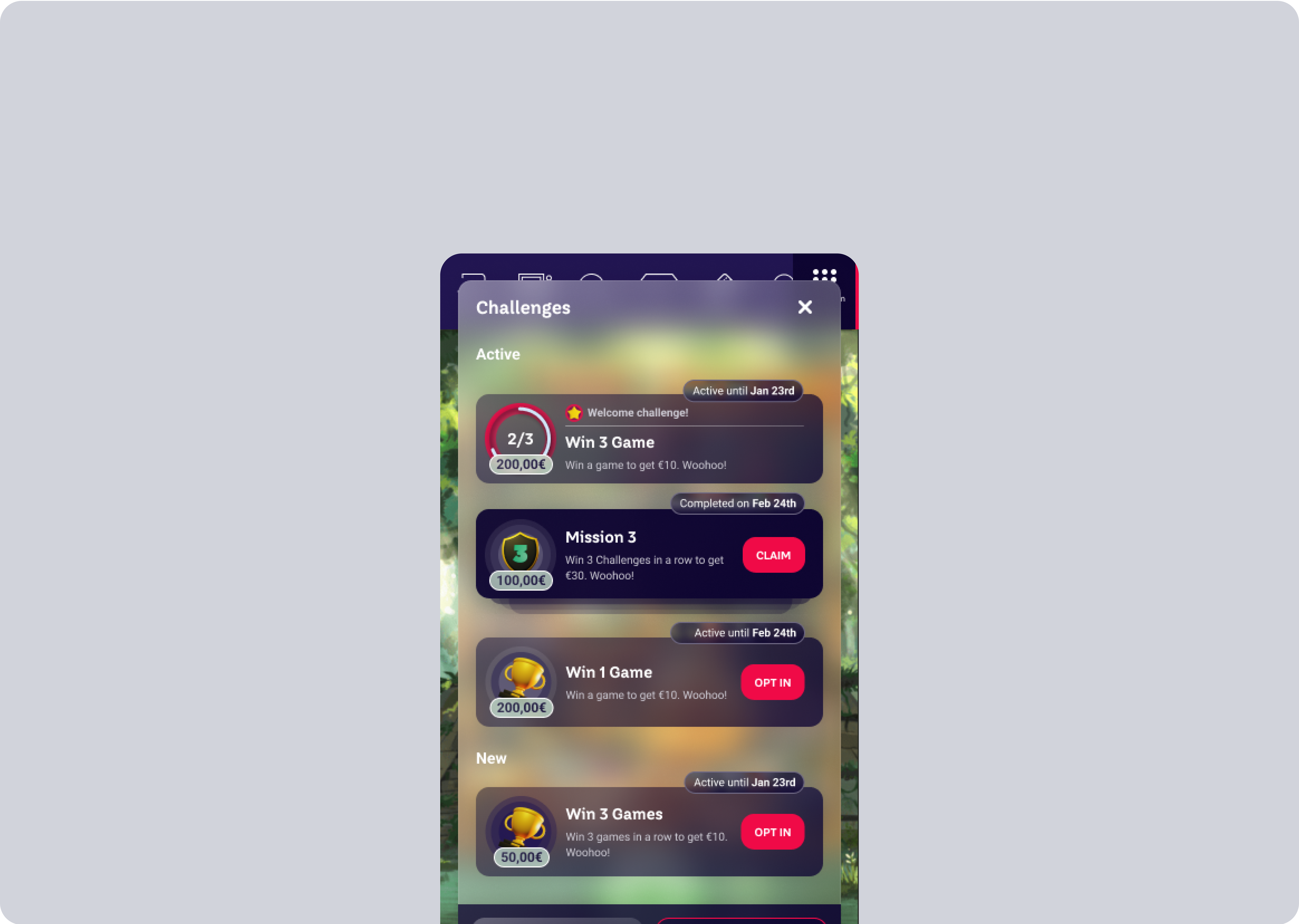
Level Up was a fast-turnaround project focused on enhancing player engagement through in-game challenges and a gamified reward system. I joined as Lead Product Designer and worked with a small team to bring the concept to life — from UX and UI to the mechanics behind missions, challenges, and tokens. The timeline was tight (as usual), but the goal was clear: create something fun, structured, and ready to roll out quickly across the group.

Why this mattered
Player retention and engagement are everything in gaming — but most experiences still rely heavily on the core game loop. The idea behind LevelUp was to add a new layer: one that motivated users to stay, play more, and feel rewarded for doing it. This project came in fast, flagged as a business priority across the group. We needed to deliver something functional, engaging, and ready to scale — and we needed it yesterday. So a dedicated team was formed to move quickly, experiment freely, and get results.
What I did
I joined the project as Lead Product Designer, working within a small team set up to move fast and deliver impact. Everyone brought something different to the table, and we worked closely across roles to shape the experience together.
My focus was on the full design process, from concept to execution. That included:
Turning a loosely defined brief into a clear product direction
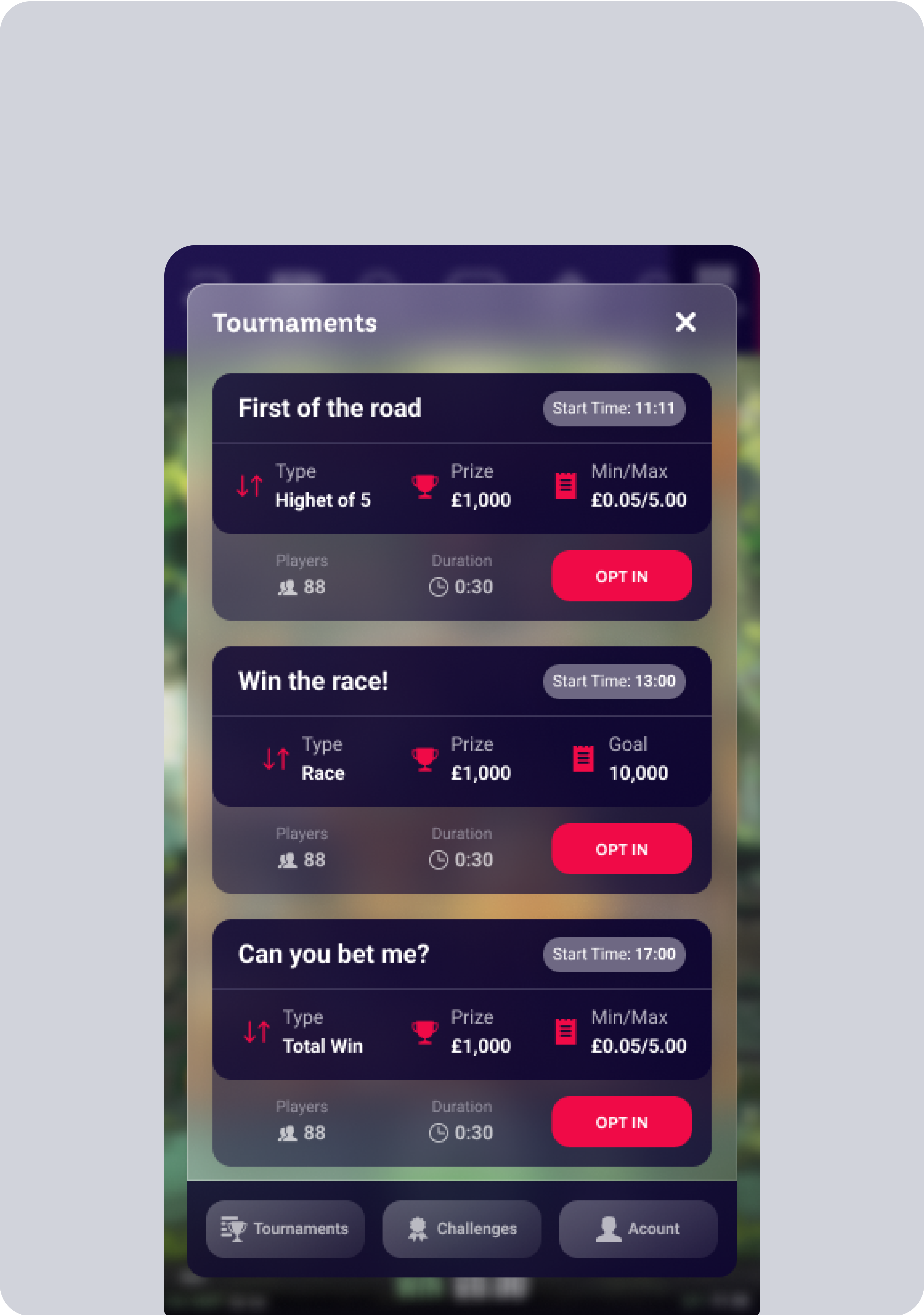
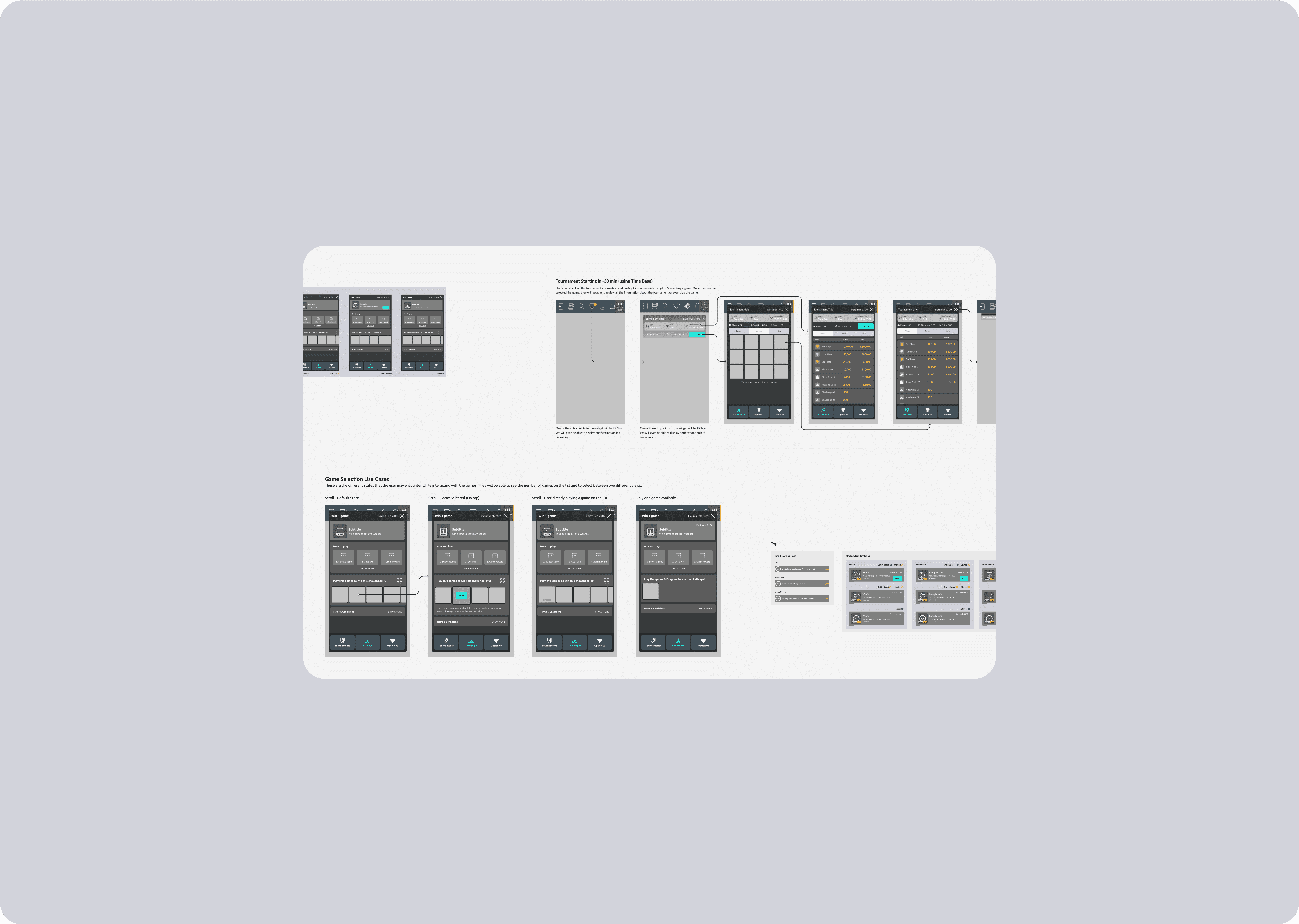
Leading the design of core mechanics like missions, challenges, tournaments, and leaderboards
Collaborating on flows, structure, and interface decisions across the team
Prototyping key interactions to validate ideas quickly
Defining logic around progression, rewards, and token systems
Designing how tournaments worked — including social dynamics between players
Creating leaderboard logic and UI: rank, score, and progression visibility
Ensuring consistency across the experience, from flow to visuals
The pace was intense, but the collaboration made it work — and the outcome was something we were all proud to ship. (And yes, we were already using glassmorphism back in 2022 — or as Apple now calls it, “Liquid Glass.”)
How we approached it
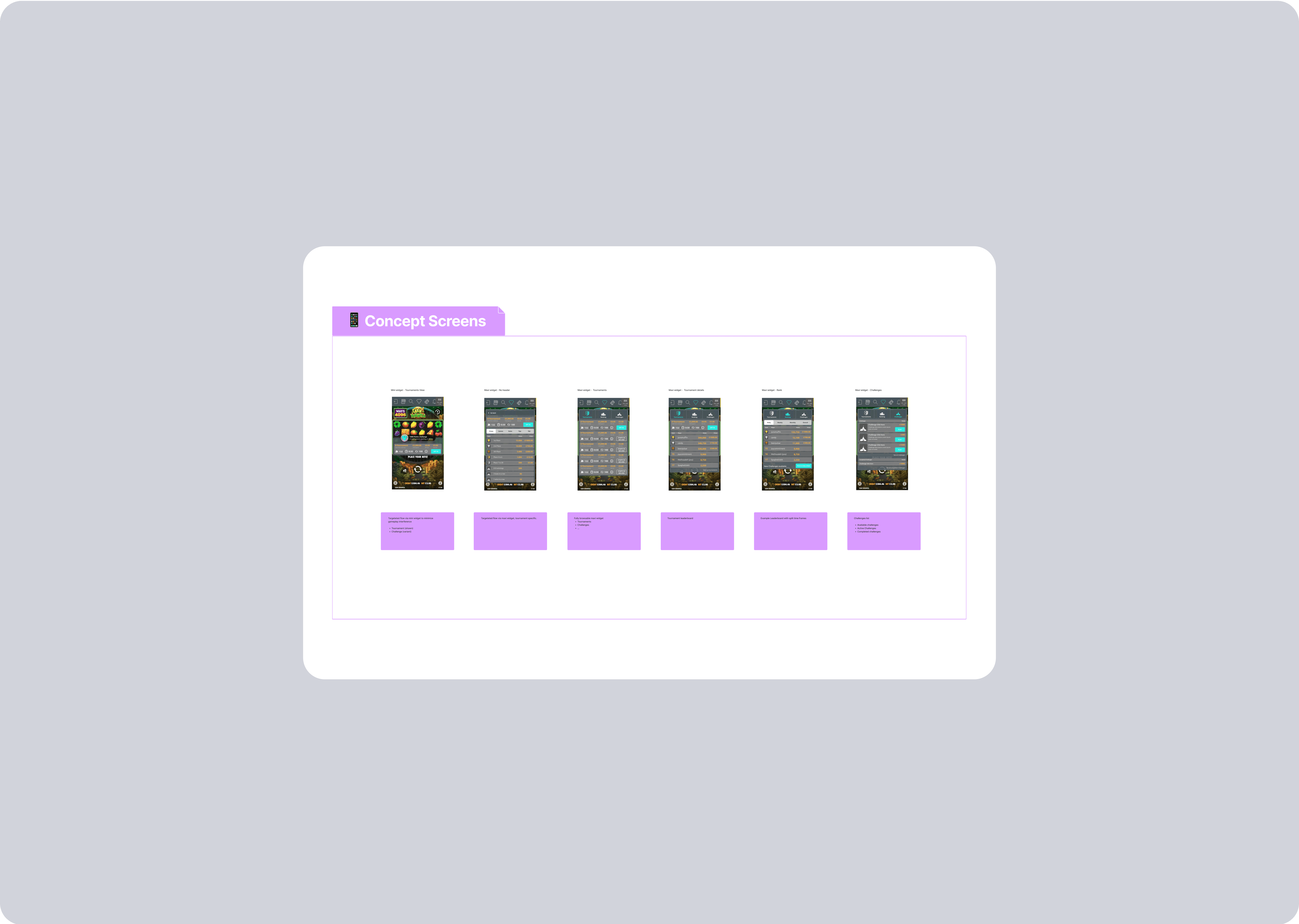
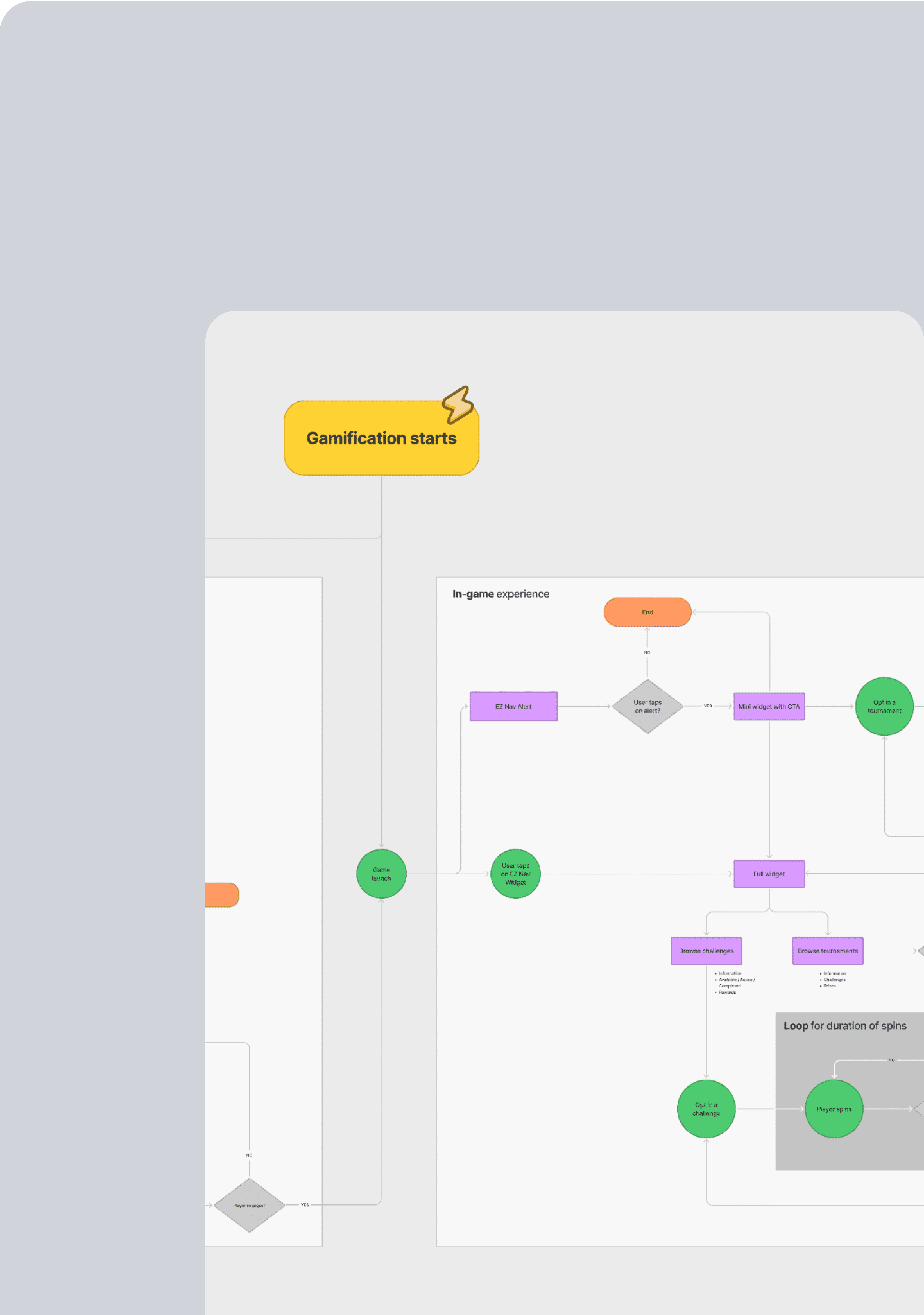
From the start, the brief was urgent: business needed something live, soon. So we formed a dedicated team, aligned quickly, and got to work — balancing speed with structure. We started by defining the key mechanics: what would make a player stay engaged beyond the core game? That led us to missions (short, rewarding tasks), challenges (progressive objectives), and tournaments (a social layer where players could compete). We also mapped out the reward logic, token flow, and how leaderboards would reflect each player’s progression. Because timing was tight, we worked in short iterations — sharing work constantly, validating fast, and keeping decisions focused on clarity and impact. The experience had to be motivating, visible, and seamless — and we kept that at the centre of every design decision.
Outcome
Level Up was very well received internally. The concept resonated across teams and brands, and there was clear excitement around what we had designed — especially the way missions, challenges, and tournaments added a new dimension to the player experience. Stakeholders appreciated how the system balanced engagement, clarity, and scalability, and there were discussions about adapting it across multiple products within the group. However, despite the positive response, the project never made it into development. Legal and regulatory constraints around reward-based mechanics meant the rollout had to be paused — and eventually shelved. Still, the work wasn’t wasted. It helped spark broader conversations about engagement, retention, and how gamified layers could be implemented in future products. It also proved that even under pressure, focused collaboration can lead to strong, reusable design foundations.
What I would’ve done next
If the project had moved forward, I would’ve loved to validate the mechanics with real users — not just to test the flow, but to understand what actually motivated players to return and engage more deeply. I also would’ve refined the reward logic and visual design further. We moved fast to meet internal timelines, and while the system was solid, some details could have benefitted from more iteration and polish. The foundations were there — and with the right setup, Level Up could’ve evolved into something powerful, scalable, and genuinely fun to use.
Keep exploring